
About Us
CHANCE is copublished quarterly by the American Statistical Association and Taylor & Francis Group. The magazine is designed for anyone who has an interest in using data to advance science, education, and society. CHANCE is a non-technical magazine highlighting applications that demonstrate sound statistical practice. CHANCE represents a cultural record of an evolving field, intended to entertain as well as inform.
Since its creation in 1988, CHANCE has covered such topics as the 1990 census adjustment and the redesigned population survey, sports, the environment, DNA evidence in the courts, a variety of medical issues—even how to win on “Jeopardy.” CHANCE offers a unique opportunity to reach beyond statistics professionals to a more general audience.
Executive Editors
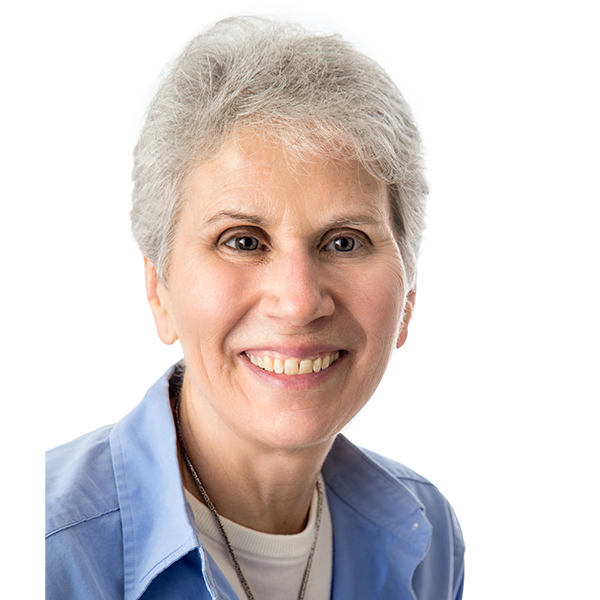 Wendy Martinez is the senior mathematical statistician for data science in the US Census Bureau Research and Methodology Directorate. Previously, she served as director of the Bureau of Labor Statistics Mathematical Statistics Research Center and worked in several research positions throughout the Department of Defense. Her research interests include computational statistics, exploratory data analysis, text analysis, and data visualization.
Martinez earned her PhD in computational sciences and informatics with an emphasis on computational statistics at George Mason University in 1995. She completed a Master of Science degree in engineering at The George Washington University in 1991 and a Bachelor of Science degree in mathematics and physics at Cameron University in 1989.
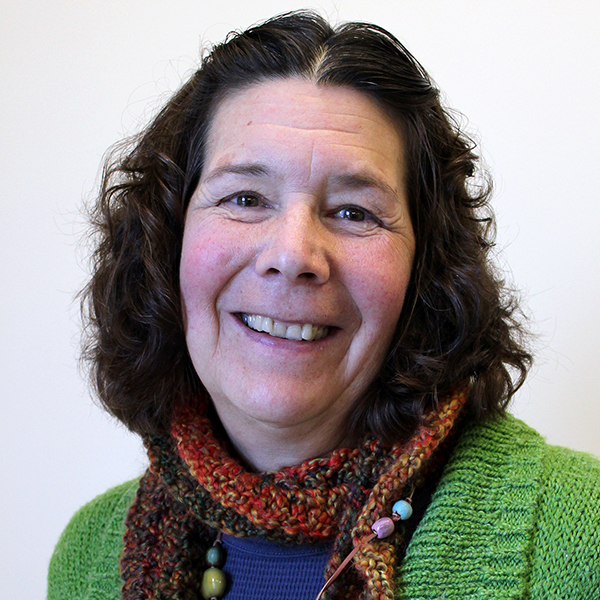 Donna LaLonde is associate executive director at the American Statistical Association, where she works with colleagues to advance the association’s vision and mission and supports activities associated with presidential initiatives, professional development, and accreditation. Before joining the ASA, LaLonde was a faculty member at Washburn University and served in various administrative positions, including interim chair of the education department and associate vice president for academic affairs.
Advisory Editors
 Sam Behseta earned his PhD from Carnegie Mellon University and is a professor at California State University, Fullerton. His main research area is statistics in neuroscience. Other research interests include stochastic modeling of decisionmaking with multi-alternatives, Bayesian functional data analysis, Bayesian nonparametrics, statistical modeling of epidemiological data, and probabilistic watermarking. Behseta has trained and mentored undergraduate and graduate students.
 Dr. Scott Evans is a professor and the founding chair of the Department of Biostatistics Bioinformatics at George Washington University, and director of the George Washington University Biostatistics Center. His interests include the design, monitoring, analyses, and reporting of and education in clinical trials and diagnostic studies. He is the author of more than 100 peer-reviewed publications and three books about clinical trials, including Fundamentals for New Clinical Trialists, and was the executive editor of CHANCE for the past several years. He is also director of the Statistical and Data Management Center (SDMC) for the Antibacterial Resistance Leadership Group (ARLG), a collaborative clinical research network that prioritizes, designs, and executes clinical research to reduce the public health threat of antibacterial resistance. Evans is a recipient of the Mosteller Statistician of the Year Award and the Robert Zackin Distinguished Collaborative Statistician Award for contributions to the AIDS Clinical Trials Group (ACTG); an elected member of the International Statistical Institute (ISI); and Fellow of the American Statistical Association (ASA), Society for Clinical Trials (SCT), and Infectious Disease Society of America (IDSA).
 Michael Larsen earned his PhD in statistics from Harvard University and is a professor of statistics at Saint Michael’s College, Colchester, VT. Before his current position, he was a tenured faculty member at George Washington University and Iowa State University. He has collaborated with researchers in many fields and consulted with numerous companies and federal statistical agencies. His research interests include survey sampling, missing data, record linkage, statistical modeling, applied statistics, and statistics education. He is a Fellow of the American Statistical Association and an elected member of the International Statistical Institute. He has served as executive editor of CHANCE, president of the Washington Statistical Society, chair of the American Statistical Association’s Survey Research Methods Section, and a member of editorial boards and National Academy of Science panels.

Michael Lavine was a professor of statistics for over 30 years and authored the free graduate-level text Introduction to Statistical Thought and the introductory text Basic Statistical Thought. He currently manages the Probability and Statistics Program for the Army Research Office.
 Hal Stern is vice provost for academic planning and Chancellor’s Professor in the Department of Statistics at the University of California, Irvine (UCI). He previously served as founding chair of the UCI Department of Statistics (2002–2010) and dean of the Donald Bren School of Information and Computer Sciences at UCI (2010–2016). He is known for his research on Bayesian statistical methods and for collaborative projects in the life sciences and social sciences. His current areas of interest include applications of statistical methods in psychiatry, human behavior, and forensic science. He is a Fellow of the American Association for the Advancement of Science (AAAS), American Statistical Association (ASA), and Institute for Mathematical Statistics (IMS).
Editors
 Jim Albert is professor of statistics in the department of mathematics and statistics at Bowling Green State University. He is the author of Bayesian Computation with R and coauthor of the books Curve Ball, Ordinal Regression Modeling, R by Example, and Analyzing Baseball with R. His interests include Bayesian modeling, statistics education, and the application of statistical thinking in sports. He has been editor of The American Statistician and Journal of Quantitative Analysis in Sports and he is a Fellow of the American Statistical Association.
 Kimberly Kaufeld is a statistician at Los Alamos National Lab in the Statistical Sciences Group. She completed her Masters in Mathematics and Statistics at Minnesota State University, Mankato and a PhD in Applied Statistics from University of Northern Colorado. Her research interests are in spatio-temporal and generalized linear models. She collaborates with researchers on a variety of applications including corrosion assessment, infrastructure modeling, anomaly detection, climate, and infectious diseases. For fun, she enjoys running, hiking, and camping.
 Sinjini Mitra obtained her PhD in statistics from Carnegie Mellon University and is an associate professor of information systems and decision sciences at California State University, Fullerton (CSUF). Before joining CSUF, she was a postdoctoral research associate at the University of Southern California (USC). Her research focuses on inter-disciplinary projects in fields such as security and biometrics, education, public health, business, and information systems. Her research interests include statistical modeling, inference, machine learning/pattern recognition, simulation models, data analytics, and statistics education. She regularly teaches courses in business statistics, business analytics, and data science, and has mentored and worked with several undergraduate and graduate students at CSUF. In December 2016, CRC Press/Chapman & Hall published her co-edited book, Biometrics in a data driven world: Trends, technologies, and challenges.
 Alexandra M. Schmidt is Professor of Biostatistics and holds the endowed University Chair in the Department of Epidemiology, Biostatistics and Occupational Health (EBOH) at McGill University. Currently, she is the Program Director of the Biostatistics Graduate Program. Between 2002 and 2016 she worked in the Department of Statistical Methods of the Federal University of Rio de Janeiro, Brazil, where she became Full Professor of Statistics in 2012. She is an Elected Fellow of the American Statistical Association (2020) and an Elected Member of the International Statistical Institute (2010). She was awarded the Distinguished Achievement Medal (2017) from the American Statistical Association’s Section on Statistics and the Environment and the Abdel El-Shaarawi Young Investigator Award (2008), from The International Environmetrics Society. She was the 2015 President of the International Society for Bayesian Analysis. Her main areas of research are on the modelling of complex spatial and spatio-temporal processes under the Bayesian framework.
 Diance Uschner, PhD, is an assistant research professor in the Department of Biostatistics and Bioinformatics at the George Washington University Milken Institute School of Public Health. She joined the GW Biostatistics Center in April 2018 and currently serves as co-investigator of the Coordinating Center for TODAY2, the long-term follow-up study of the Treatment Options for T2D in Adolescents and Youth (TODAY) study.
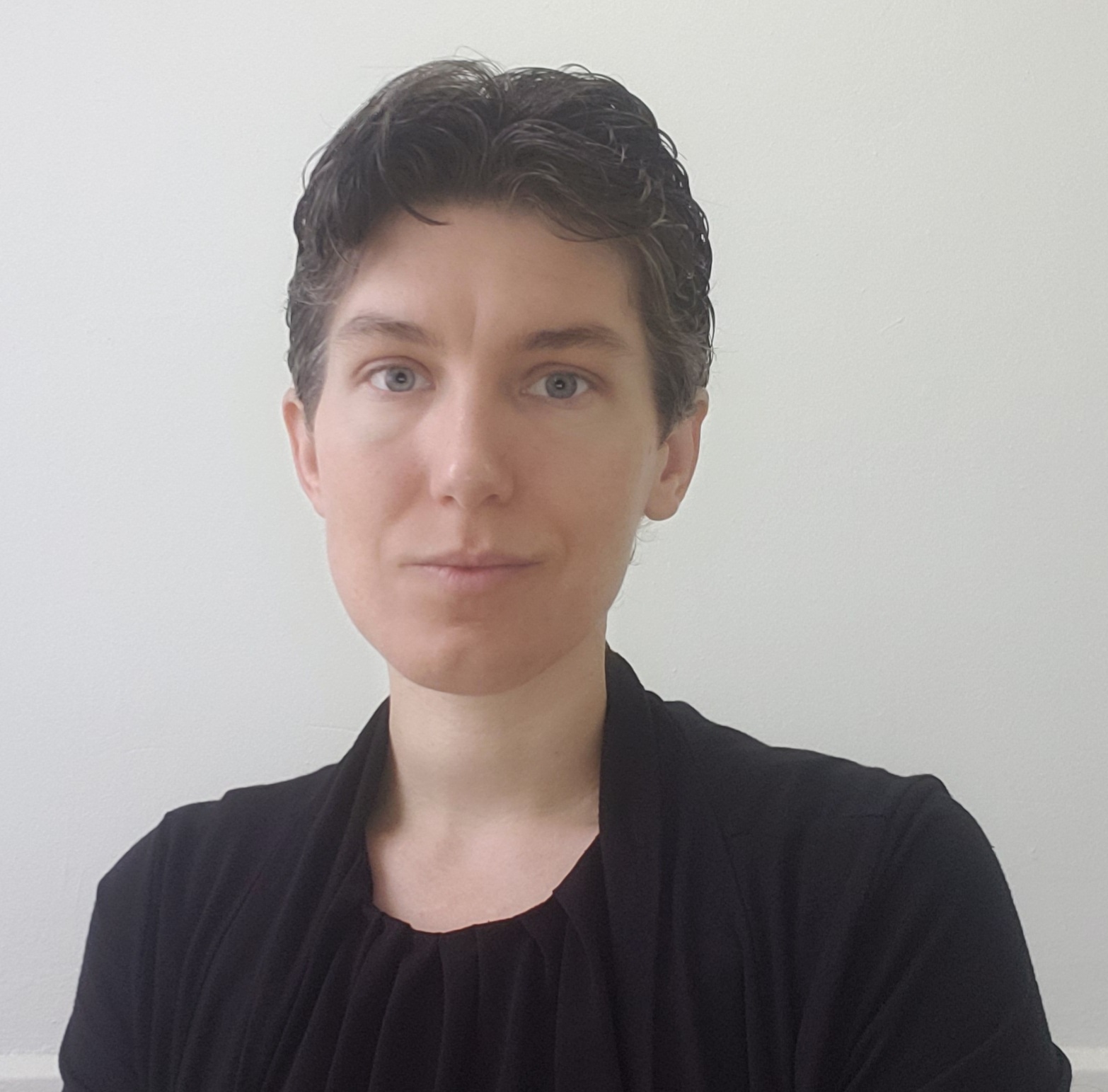 Haley Hunter-Zinck is a data scientist in the Center for Optimization and Data Science at the U.S. Census Bureau. She holds a PhD in Computational Biology from Cornell University and has worked as a data scientist in the public, non-profit, and academic sectors on applications in genetics, clinical informatics, and synthetic data generation. Since joining Census in June 2022, she has worked on projects developing web scraping, natural language processing, and machine learning tools for frame enhancement, survey data augmentation, and response processing.
Column Editors
 Mine Çetinkaya-Rundel is Senior Lecturer at University of Edinburgh, Associate Professor of the Practice at Duke University, and Data Scientist and Professional Educator at RStudio. Mine’s work focuses on innovation in statistics and data science pedagogy, with an emphasis on computing, reproducible research, student-centered learning, and open-source education as well as pedagogical approaches for enhancing retention of women and under-represented minorities in STEM. Mine works on the OpenIntro project, whose mission is to make educational products that are free, transparent, and lower barriers to education and organizes ASA DataFest. She is co-editor of the Taking a Chance in the Classroom column.
 Andrew Gelman, is a professor of statistics and political science and director of the Applied Statistics Center at Columbia University. He has received many awards, including the Outstanding Statistical Application Award from the American Statistical Association and the award for best article published in the American Political Science Review. He has coauthored many books; his most recent is Red State, Blue State, Rich State, Poor State: Why Americans Vote the Way They Do. He is editor of the Ethics and Statistics column.
 Ed Gracely is an associate professor of family, community and preventive medicine, and also of epidemiology and biostatistics, both at Drexel University in Philadelphia, PA. He earned his PhD in Quantitative Psychology from Temple University in 1987 and has worked at Drexel (or institutions that were later merged with Drexel) since graduate school. He is active in the ASA Section on Teaching of Statistics in the Health Sciences and in Statistics Without Borders. He consults with a wide variety of researchers and teaches statistics to medical, graduate biomedical, and public health students. He is co-editor of the Teaching Statistics in the Health Sciences column.
 Mary Gray, who writes The Odds of Justice column, is Distinguished Professor of Mathematics and Statistics at American University in Washington, DC. Her PhD is from the University of Kansas and her JD is from Washington College of Law at American. A recipient of the Elizabeth Scott Award from the Committee of Presidents of Statistical Societies and the Karl Peace Award from the American Statistical Association, she currently teaches legal and ethical issues in data science. Her research interests include statistics and the law, economic equity, survey sampling, human rights, education, and the history of mathematics.
 Nicole Lazar, who writes The Big Picture column, earned her PhD from The University of Chicago. She is a professor in the department of statistics at Penn State University, and her research interests include the statistical analysis of neuroimaging data, empirical likelihood and other likelihood methods, and data visualization. She also is an associate editor of The American Statistician and The Annals of Applied Statistics and the author of The Statistical Analysis of Functional MRI Data.
 Fang Liu, is associate professor and director of Graduate Studies in Applied and Computational Mathematics and Statistics at the University of Notre Dame, Indiana. Liu holds a doctoral degree in biostatistics from University of Michigan, Ann Arbor. Her main research interests include data privacy and differential privacy, Bayesian statistics, statistical machine learning, missing data analysis, and applications of statistics to medical, biological and social sciences. Liu is co-editor of the O Privacy, Where Art Thou? column.
 Bob Oster is a professor in the division of preventive medicine in the department of medicine at the University of Alabama at Birmingham (UAB). He is an associate editor of The American Statistician. He is active in the ASA Section on Teaching of Statistics in the Health Sciences, the Association for Clinical and Translational Science Biostatistics, Epidemiology, and Research Design Special Interest Group, and the Association of Clinical and Translational Statisticians. He has authored many peer-reviewed publications. His research interests include statistics education to health science learners, categorical data analysis, longitudinal data analysis, and modern statistical computing methods. He serves as co-director of the UAB Center for Clinical and Translational Science Biostatistics, Epidemiology, and Research Design program. He earned his PhD in biostatistics from the University of Cincinnati. He is co-editor of the Teaching Statistics in the Health Sciences column.
 Christian Robert is a professor of statistics at both the Université Paris-Dauphine PSL and University of Warwick, and a senior member of the Institut Universitaire de France. He has authored eight books and more than 150 papers about applied probability, Bayesian statistics, and simulation methods. Currently deputy editor of Biometrika, Robert also served as co-editor of the Journal of the Royal Statistical Society Series B and as an associate editor for most major statistical journals. He is a Fellow of the Institute of Mathematical Statistics, American Statistical Association, and International Society for Bayesian Analysis, and an IMS Medallion Lecturer. He is editor of the Book Reviews column.
 Aleksandra Slavkovic, who co-edits O Privacy, Where Art Thou?, earned her PhD from Carnegie Mellon University. She is an associate professor of statistics, with appointments in the department of statistics and Institute for CyberScience at Penn State University and department of public health sciences at Penn State College of Medicine. She serves as an associate editor of the Annals of Applied Statistics, Journal of Privacy and Confidentiality, and Journal of Statistical Computation and Simulation. Her primary research interest is in data privacy and confidentiality. Other research interests include evaluation methods for human performance in virtual environments, statistical data mining, application of statistics to social sciences, algebraic statistics, and causal inference.
 Maria Tackett, who co-edits the Taking a Chance in the Classroom column is an assistant professor of the practice in the department of statistical science at Duke University. Her research focuses on using technology and active learning techniques to enhance student learning and motivation in large undergraduate statistics courses. Prior to joining the faculty at Duke, Maria earned a PhD in statistics from the University of Virginia and worked in industry as a statistician at Capital One.
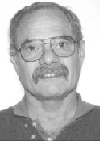 Howard Wainer, who writes Visual Revelations, is a statistician and author who has written “Visual Revelations” continuously since 1990. He has won numerous awards and is a Fellow of the American Statistical Association and the American Educational Research Association. His most recent book is Truth or Truthiness: Distinguishing Fact from Fiction by Learning to Think like a Data Scientist, which was published by Cambridge University Press and was named by the Financial Times to its “Top Six Books of 2016.” He is writing a history of graphics with Michael Friendly that is tentatively entitled The Origin of Graphic Species and will be published by Harvard University Press as soon as they can finish it.
 Brian Macdonald, who is co-editor of Beyond the Box Score, is currently a lecturer in the Department of Statistics and Data Science at Yale University. He was previously Special Faculty in Sports Analytics in the Department of Statistics and Data Science at Carnegie Mellon University, the Director of Sports Analytics in the Stats & Information Group at ESPN, Director of Hockey Analytics with the Florida Panthers Hockey Club, an Associate Professor in the Department of Mathematical Sciences at West Point, and an Adjunct Professor at University of Miami and Florida Atlantic University. He received a Bachelor of Science in Electrical Engineering from Lafayette College, Easton, PA, and a Master of Arts and a PhD in mathematics from Johns Hopkins University, Baltimore, MD.